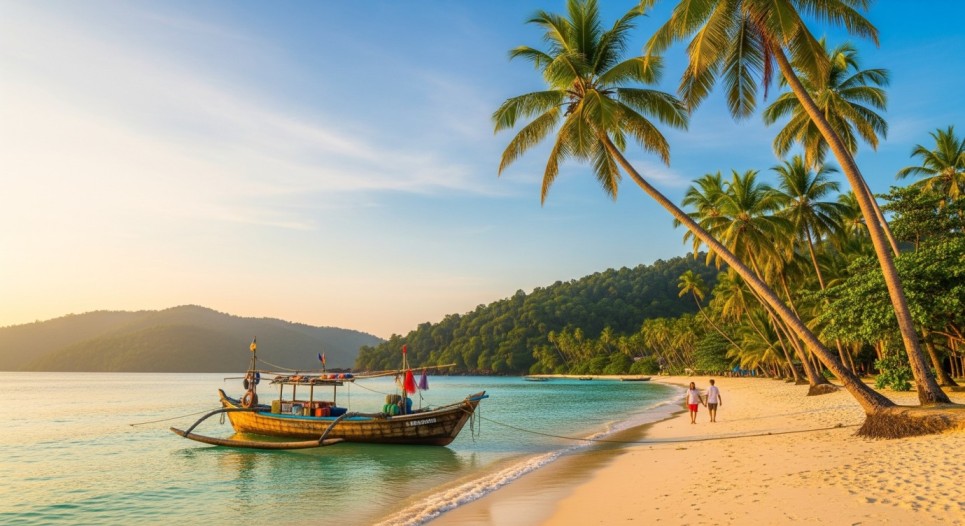
Second-City Travel Destinations are changing the way curious travellers plan international holidays. Instead of automatically choosing the most famous capital or the city that dominates social media, travellers are beginning to look one step further—to places with strong culture, memorable food, beautiful streets and meaningful experiences, but often with a different pace.
The idea is not to avoid famous destinations completely. Paris, Seoul, Tokyo, Lisbon and Rome deserve their popularity. However, choosing an alternative city can create a very different holiday. You may spend less time moving between headline attractions and more time walking through neighbourhoods, sitting in local cafés, discovering markets and enjoying the city at your own rhythm.
For Indian travellers who want a customized international holiday rather than a standard sightseeing checklist, second-city tourism can be an interesting way to travel. Saar Holidays can help combine major attractions with lesser-known cities through its customized domestic and international holiday planning.
Quick Guide to Second-City Travel Destinations
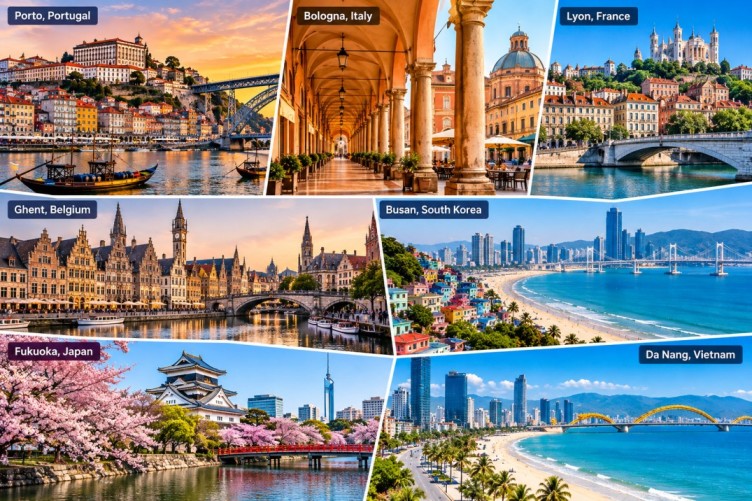
| Destination | Popular Alternative To | Ideal For | Suggested Stay |
|---|---|---|---|
| Porto, Portugal | Lisbon | River views, heritage, food | 2–3 nights |
| Bologna, Italy | Rome / Florence | Food, architecture, slow travel | 2–3 nights |
| Lyon, France | Paris | Gastronomy, history, neighbourhoods | 2–3 nights |
| Ghent, Belgium | Brussels / Bruges | Canals, medieval heritage, culture | 2 nights |
| Busan, South Korea | Seoul | Beaches, markets, K-culture | 3–4 nights |
| Fukuoka, Japan | Tokyo / Kyoto | Food, city life, regional Japan | 2–3 nights |
| Da Nang, Vietnam | Hanoi / Ho Chi Minh City | Beach, mountains, relaxed city break | 3–4 nights |
These cities are not empty or undiscovered. Some are major destinations in their own right. The advantage is that they can offer an alternative to the most heavily promoted tourist route.
What Does Second-City Travel Actually Mean?
Second-city travel does not always mean visiting the literal second-largest city in a country.
Instead, it means choosing alternative travel destinations that sit outside the usual first-choice itinerary. A traveller visiting France might consider Lyon instead of spending the entire trip in Paris. Someone travelling to South Korea could add Busan rather than staying only in Seoul.
This approach works particularly well for repeat visitors, culture lovers, couples who prefer slower holidays and travellers who enjoy exploring neighbourhoods instead of rushing between landmarks.
The strongest Second-City Travel Destinations usually pass three tests:
- They offer enough attractions for at least two or three days.
- They have a distinct identity rather than feeling like a smaller version of the famous city.
- They are practical enough to reach and explore without making the itinerary unnecessarily complicated.
This is what separates worthwhile hidden gem destinations from places that are merely obscure.
1. Porto, Portugal: Choose the Douro Instead of Following Everyone to Lisbon
Lisbon often becomes the automatic starting point for a Portuguese holiday. Porto offers something different.
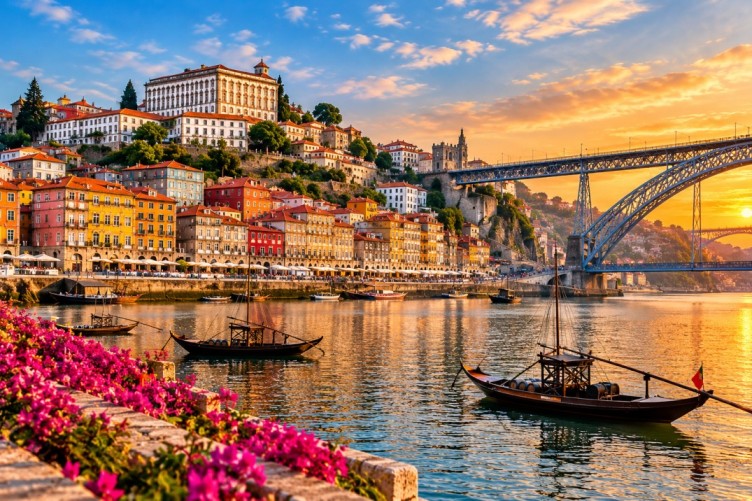
Portugal’s second-largest city sits where the Douro River reaches the Atlantic. Its comparatively compact centre makes it suitable for travellers who enjoy exploring on foot, stopping at viewpoints and spending time beside the river rather than constantly moving between distant attractions. Porto’s official tourism authority highlights the city’s mixture of historic heritage, contemporary culture, nature, food and wine.
Start around Ribeira, where colourful buildings descend towards the Douro. Cross the Dom Luís I Bridge for wide river views, explore historic streets around the cathedral and leave enough time simply to walk.
The official Porto tourism guide describes Praça da Ribeira as one of the city’s oldest squares, with medieval origins and a long commercial history. Travellers who want to plan beyond the obvious photo stops can explore the city’s neighbourhoods through the official Visit Porto guide.
Why Porto Works as a Second City
Porto feels substantial enough for a dedicated stay but manageable enough that two or three nights can reveal its personality.
It suits:
- Couples
- Food and wine travellers
- Architecture lovers
- First-time visitors to Portugal
- Travellers planning a Lisbon-Porto combination
Rather than thinking “Lisbon or Porto,” consider using both. A well-designed Portugal itinerary can use the two cities to show very different sides of the country.
2. Bologna, Italy: Come for the Architecture, Stay for the Food
Italy creates a difficult problem for travellers: too many famous cities compete for the same itinerary.
Rome offers ancient monuments. Florence has Renaissance masterpieces. Venice has canals. As a result, Bologna can be overlooked even though it offers exactly the kind of experience many travellers say they want—good food, historic architecture and streets that reward aimless exploration.
Bologna’s defining visual feature is its network of porticoes. Bologna Welcome notes that the city’s porticoes extend for roughly 62 kilometres, with around 40 kilometres inside the city centre, and are recognized as UNESCO World Heritage.
Walk under the arcades towards Piazza Maggiore, explore the historic university quarter and make food part of the itinerary instead of treating meals as breaks between attractions.
The city’s official tourism portal features museums, palaces, churches, guided walks, food experiences and itineraries extending into Greater Bologna. Travellers can use the official Bologna Welcome guide to explore current attractions.
Why Bologna Belongs Among Underrated Cities to Visit
Bologna’s strength is not one world-famous monument. It is the complete city experience.
Morning can begin beneath historic porticoes. Lunch can stretch longer than planned. The afternoon can be spent exploring old university streets, while evening becomes an opportunity to enjoy local dining without building the entire day around one attraction.
For travellers interested in history and architecture, Saar Holidays’ heritage and culture travel ideas can also provide inspiration for creating a culture-focused itinerary.
3. Lyon, France: Look Beyond Paris
Paris may dominate French tourism, but France does not begin and end with its capital.
Lyon offers a combination of Roman history, Renaissance streets, contemporary districts, riverfronts and one of France’s strongest food identities.
The historic centre covers areas including Vieux Lyon, Fourvière and the Presqu’île. Lyon’s tourism office describes a heritage landscape stretching from ancient Fourvière through Renaissance Old Lyon to the contemporary Confluence district; about 500 hectares of central Lyon are UNESCO-listed.
One of the city’s pleasures is the contrast between areas. Walk through the narrow passages and traboules of Vieux Lyon, climb towards Fourvière for elevated views, then experience a very different architectural mood around Confluence.
Food should also be part of the plan. Lyon’s tourism office emphasizes the city’s longstanding gastronomic reputation, from traditional bouchons to contemporary restaurants.
Paris or Lyon?
You do not need to choose.
For a first French holiday, Paris may still deserve several days. Lyon works brilliantly as a second stop because it changes the rhythm of the journey.
This is the real appeal of alternative destinations to popular cities: they complement the famous destination instead of trying to replace it.
4. Ghent, Belgium: Medieval Beauty with a Lived-In City Feel
Belgium often leads travellers towards Brussels and Bruges. Ghent sits between the two in more ways than geography.
It has the canals and historic architecture travellers seek in Belgium, but it also functions as a lively university city. That creates a mixture of old buildings, cafés, nightlife, art and everyday urban life.
The official Visit Gent portal describes Ghent as a cultural city on a “human scale,” combining history with contemporary urban life. Major attractions include the Castle of the Counts, museums and the renowned Ghent Altarpiece.
The centre is particularly friendly to walking and cycling; Visit Gent notes that its car-free centre is designed around pedestrians and cyclists.
Instead of arriving for a few hours and leaving, stay overnight. The atmosphere changes after day visitors disappear, especially around Graslei, Korenlei and the historic centre.
Why Ghent Is One of the Best Hidden Cities Around the World
Ghent offers a useful lesson in second-city travel: famous landmarks are not always necessary for a memorable stay.
Sometimes the attraction is the whole urban environment—historic buildings reflected in canals, bicycles moving through old streets, student cafés beside medieval architecture and evenings without a tightly scheduled sightseeing list.
Travellers searching for less crowded holiday destinations should still expect busy periods, especially during events and summer weekends. Second-city travel means reducing tourist pressure, not expecting an empty city.
5. Busan, South Korea: Swap Skyscrapers for Coastline
A first South Korea itinerary usually begins with Seoul—and understandably so.
However, stopping there means missing one of the country’s most interesting contrasts.
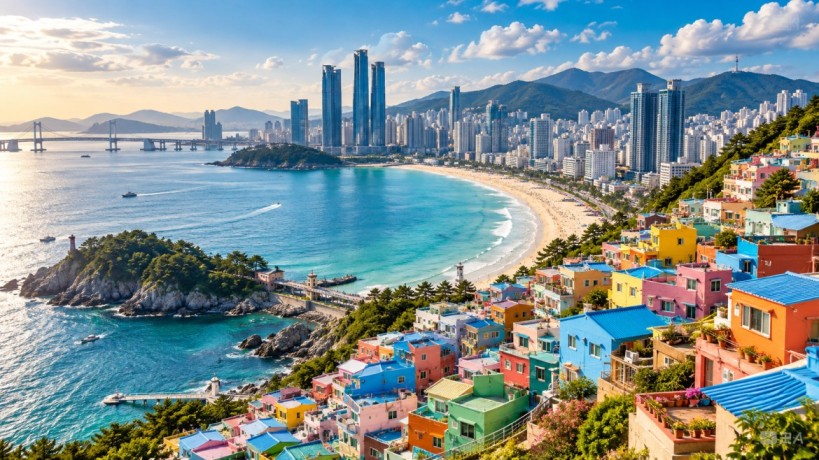
Busan combines beaches, seafood markets, hillside neighbourhoods, mountain scenery and modern city life. Its official tourism guide highlights Haeundae Beach, Gwangalli, Gamcheon Culture Village, Huinnyeoul Culture Village and historic downtown areas around Nampo-dong and Jagalchi.
Gamcheon is particularly distinctive. The neighbourhood grew from a difficult chapter in Busan’s modern history, when refugees settled in the hillside area during the Korean War. A community art project launched in 2009 later helped transform its alleys with murals and creative spaces.
Travellers can explore the city’s current attractions through the official Visit Busan travel guide.
Seoul + Busan Is Better Than Seoul Alone
Spend several days in Seoul for palaces, shopping and urban culture, then change pace in Busan.
Morning might begin beside the sea. Lunch can involve a market visit. The afternoon could lead into hillside alleys, and evening can end with views around Gwangalli.
For Indian travellers increasingly interested in Korean culture, this combination creates a broader picture of the country than staying in the capital alone.
6. Fukuoka, Japan: An Easier Introduction to Urban Japan
Tokyo is exhilarating. Kyoto is culturally rich. Osaka is energetic.
Yet a traveller looking for offbeat travel destinations in Japan should consider Fukuoka.
Located on Kyushu, Fukuoka combines a modern urban centre with temples, parks, coastal areas and one of its most recognizable experiences: yatai street-food stalls.
Fukuoka’s official tourist guide highlights local dishes such as ramen, yakitori and regional specialities, along with historic areas, festivals and nature accessible from the city.
The city also works well for travellers who want variety without constantly changing hotels. Areas such as Hakata, Tenjin, Ohori and the waterfront can fill several days, while wider Kyushu opens possibilities for a longer itinerary.
Use the official Fukuoka City tourist guide to explore seasonal attractions and local itineraries.
Why Fukuoka Works for Slow Travel
Fukuoka does not demand that you race from one globally famous attraction to another.
That is precisely its advantage.
You can build the day around food, neighbourhoods, parks and smaller cultural experiences. This makes it one of the more interesting alternative city breaks for repeat visitors to Japan or travellers who want to experience the country beyond its Golden Route.
7. Da Nang, Vietnam: Let the Beach Become Part of the City Break
Vietnam’s international tourism story is often told through Hanoi, Ho Chi Minh City and historic Hoi An.
Da Nang provides another option.
The city sits on Vietnam’s central coast, combining an urban environment with long beaches and mountain landscapes. Da Nang’s official tourism portal describes the destination as a meeting point of coast, mountains, modern city life and Central Vietnamese culture.
My Khe and the wider coastline provide obvious reasons to stay, but the destination becomes more useful when treated as a base rather than simply a beach stop.
From Da Nang, travellers can plan experiences around Son Tra, the Marble Mountains and the Hai Van area while also connecting the trip with nearby cultural destinations.
The tourism authority notes that Da Nang’s beaches extend along a substantial section of coastline, while the city’s western side opens towards mountain and forest landscapes.
Travellers can explore current experiences through the official Da Nang tourism portal.
Why Da Nang Fits Second-City Tourism
Da Nang works particularly well for couples and families who do not want every day of an international holiday to involve intensive sightseeing.
Spend the morning exploring. Return to the beach in the afternoon. Use another day for a nearby cultural excursion.
That flexibility makes it one of the more practical emerging travel destinations for travellers who value balance.
Why Second-City Travel Is Becoming More Attractive
Modern tourism often concentrates huge numbers of travellers into a surprisingly small number of neighbourhoods.
The result can be predictable: long queues, expensive central accommodation, crowded viewpoints and itineraries built around securing timed entry slots.
Second-City Travel Destinations offer another approach.
Instead of asking, “What are the ten attractions everyone visits?”, ask:
- Where would I enjoy walking without a schedule?
- Which city gives me food, culture and neighbourhood life together?
- Where can I stay for three nights without needing ten famous monuments?
- Can I combine one major city with one quieter destination?
- Would I rather see more places or understand fewer places better?
Those questions often lead to better trips.
A Better Way to Build a Second-City Itinerary
Do not build a holiday entirely from lesser-known tourist places simply because they are less famous.
A better itinerary mixes familiarity with discovery.
Option 1: The Major City + Second City Formula
Spend four nights in the headline destination and three nights in the alternative.
Examples:
Lisbon + Porto
Paris + Lyon
Seoul + Busan
This works especially well for first-time visitors.
Option 2: The Slow Region Formula
Select one second city as a base and use it for nearby day trips.
Fukuoka and Da Nang work particularly well for this style because travellers can combine city experiences with surrounding areas without changing hotels every night.
Option 3: The Culture-First Holiday
Choose cities based on one interest:
Food: Bologna + Lyon
Coast: Porto + Busan + Da Nang
Medieval cities: Ghent + Bologna
Asian city life beyond capitals: Busan + Fukuoka
Travellers who want help combining destinations can browse more Saar Holidays destination planning guides or request a route designed around their preferred pace.
How to Choose an Underrated City for Your Next Holiday
Before booking, check five practical factors.
1. Connectivity
A hidden destination loses its appeal if reaching it requires a full day of awkward connections.
Look for cities connected by direct flights, fast trains or convenient domestic transport from the main gateway.
2. Minimum Stay Value
Ask whether the city can comfortably fill two or three nights.
If the answer is only one afternoon, it may be better as a day trip.
3. Accommodation Location
Saving money by staying far outside the centre can defeat the purpose of slower travel.
A centrally located hotel can reduce daily travel time and allow evening exploration on foot.
4. Your Travel Personality
Families may prefer Da Nang or Busan because they combine sightseeing with open spaces and coastal experiences.
Food-focused couples may prefer Bologna or Lyon.
Travellers who enjoy architecture and walking may lean towards Porto or Ghent.
5. Season
A quieter destination can still become very busy during festivals, holidays or peak summer weekends.
Therefore, “second city” should never be interpreted as “crowd-free at all times.”
Why Plan Second-City Travel with Saar Holidays?
Multi-city holidays become more complicated when flights, trains, hotel locations and luggage movement are considered together.
Saar Holidays can design customized itineraries that combine well-known cities with Second-City Travel Destinations, allowing travellers to decide how much time they want for sightseeing, relaxation and local experiences.
For example:
- Portugal can combine Lisbon and Porto.
- France can combine Paris and Lyon.
- South Korea can combine Seoul and Busan.
- Japan can combine major Golden Route cities with Fukuoka.
- Vietnam can combine urban sightseeing with a slower Da Nang stay.
Families may prefer fewer hotel changes. Couples may want extra free evenings. Senior travellers may benefit from shorter transfer days. Each itinerary can therefore be adjusted instead of forcing every traveller into the same route.
To discuss a personalized journey, travellers can contact the Saar Holidays travel team.
Frequently Asked Questions
What are the best Second-City Travel Destinations?
Strong options include Porto in Portugal, Bologna in Italy, Lyon in France, Ghent in Belgium, Busan in South Korea, Fukuoka in Japan and Da Nang in Vietnam. The right choice depends on your interests, available days and how easily the city fits into the larger itinerary.
What does second-city travel mean?
Second-city travel means exploring an alternative to a country’s most heavily promoted tourist city. It does not necessarily mean visiting the literal second-largest city. The idea is to discover places with strong culture, food, history or nature that sit outside the standard first-time tourism route.
Which cities are less crowded for tourists?
Crowd levels change by season, events and neighbourhood. Cities such as Lyon, Ghent, Fukuoka and Bologna can provide an alternative to heavily visited capital-city itineraries, but none should be described as permanently crowd-free. Travelling in shoulder seasons and staying overnight can make a significant difference.
What are the best hidden gem cities to visit?
For travellers who enjoy culture and walking, Ghent and Bologna are strong choices. For food-focused travel, consider Lyon or Fukuoka. Porto offers river scenery and heritage, while Busan and Da Nang combine city experiences with the coast.
Which destinations are alternatives to popular tourist cities?
Porto can complement Lisbon, Lyon provides an alternative French experience beyond Paris, Busan expands a Seoul-focused South Korea holiday, and Fukuoka gives travellers another way to experience Japan beyond Tokyo, Kyoto and Osaka.
Why is second-city tourism becoming popular?
Travellers increasingly want deeper experiences rather than simply collecting famous landmarks. Alternative destinations can provide neighbourhood exploration, regional food, local culture and more flexible itineraries. They may also help distribute visitor spending beyond a country’s most heavily visited tourism centres.
How do I choose an underrated city for my next holiday?
Choose a city that matches your interests and has enough experiences for at least two nights. Then check transport connections, hotel locations, seasonality and how naturally it fits into the rest of the journey. A good second city should improve an itinerary rather than complicate it.
Final Thoughts
Travel does not become more meaningful simply because a destination is famous.
Some of the strongest memories come from places you had not originally planned to visit: an evening beside the Douro in Porto, a long lunch in Bologna, a canal-side walk in Ghent, seafood after a Busan beach day or a quiet morning in Fukuoka.
That is the real appeal of Second-City Travel Destinations. They give travellers permission to move away from the compulsory checklist and design a holiday around curiosity instead.
The goal is not to find places where nobody else travels. It is to discover cities where your trip can breathe.
Plan a Different Kind of Holiday with Saar Holidays
Want to combine a famous city with a lesser-known destination?
Saar Holidays can create a customized international itinerary based on your travel dates, preferred destinations, hotel category, number of travellers and sightseeing interests.
Speak with Saar Holidays about a customized itinerary
Flight availability, visa and entry requirements, attraction schedules and hotel prices may change. Travellers should verify current requirements before booking.